
Spring is the window when your gutters need attention, right after winter loosens them up and before monsoon season tests every seam. This spring gutter maintenance checklist walks you through what to inspect, what to clean, and what to fix before the summer storms roll into Prescott, Prescott Valley, Sedona, and the rest of the high country.
Why Spring Matters More Than Any Other Season
Most homeowners think about gutters in the fall when leaves pile up. Up here, spring is actually the bigger deal. Winter snow, ice, and freeze-thaw cycles pull fasteners loose, crack sealant, and bend sections out of alignment. Pine needles and juniper berries that blew in during windstorms settle into the channels and harden into a mat.
Then monsoon season hits in late June or early July and your gutters need to handle an inch of rain in twenty minutes. If something’s loose, clogged, or sagging when that first big storm rolls through, you’ll know within an hour. The damage shows up as stained siding, soaked fascia, or water pooling right at the foundation.
Getting ahead of it now is cheaper, faster, and a lot less stressful than dealing with it during the storm.
Start With a Ground-Level Visual Inspection
Before you climb a ladder, walk the perimeter of your house and look up. You’re checking for obvious problems you can spot from 30 feet away. Sagging sections, pieces pulling away from the fascia, visible gaps at seams or corners, and downspouts that are bent, crushed, or disconnected at the elbow.
Pay extra attention to the roofline after a heavy snow year. If you had ice dams in January or February, you’ll often see the aftermath as bent lips, stretched hangers, or low spots where water now pools. Take a picture with your phone if you see something off. Having a before-shot makes it easier to tell if a problem is getting worse through the season.
Check the ground below each downspout too. Erosion lines, dead grass, or staining on the stem wall means water was dumping there all winter. That’s a downspout or a splash block problem, not a gutter problem, but it needs to get fixed in the same pass.
Clean the Channels and Downspouts
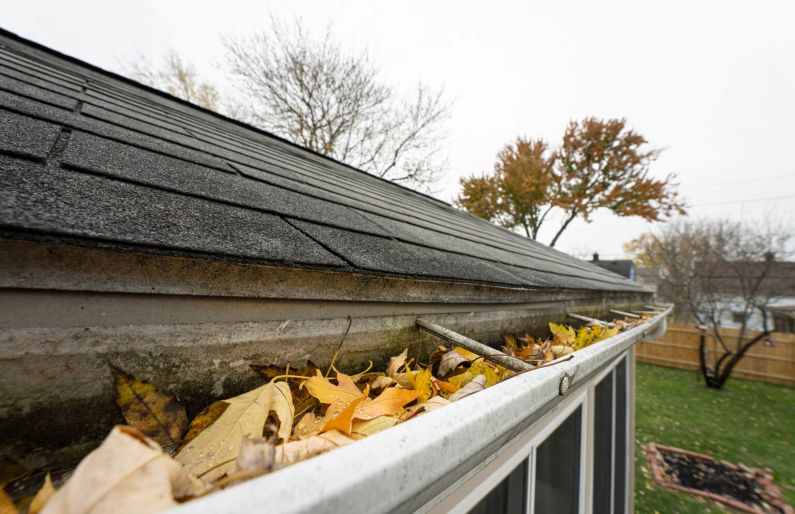
Once you’ve done the visual, it’s time to actually get up there. Clean out every inch of the gutter channel, not just the obvious debris at the downspout openings. Winter grit, shingle granules, and dried leaf mulch pack down into a layer that won’t wash out on its own.
Scoop it into a bucket, don’t let it fall to the ground. Cleaning a flower bed of old gutter sludge is a miserable afternoon you don’t need. After the channel is empty, run a garden hose from the far end and watch the water move toward the downspout.
If the water backs up, pools, or trickles out the bottom of the downspout instead of gushing, you’ve got a blockage lower down. A plumber’s snake or a pressure washer attachment can clear most of them. Stubborn clogs sometimes mean the downspout is crushed or the underground extension is cracked. That’s a fix worth doing now, not in August.
Inspect the Fasteners, Seams, and End Caps
This is where most spring repairs live. Walk the gutter run with your hand on the front lip and push gently. Anything that moves more than a quarter inch means loose hangers. Hidden hangers should be spaced every 24 inches, and every one of them should be grabbing solid wood.
Check the seams where two sections meet, the end caps on the corners, and the miter joints at every inside and outside corner. Old sealant dries out, cracks, and lets water drip through. You’ll see rust streaks or mineral staining on the underside of the gutter if it’s been leaking for a while.
If the fascia board behind the gutter feels soft, punky, or shows dark staining, there’s rot underneath. That’s a bigger job because you can’t just re-hang into bad wood. For a full rundown of what to look for, our guide on signs of fascia and soffit damage walks through the early warning signs before the repair gets expensive.
DIY vs Professional Spring Maintenance
| Task | Doable Yourself | Call a Pro |
|---|---|---|
| Scooping leaves and grit from channels | Yes, with a ladder and gloves | If your house is 2+ stories or on a slope |
| Flushing downspouts with a hose | Yes | When water backs up and won’t clear |
| Tightening a loose hanger or two | Yes, with the right screws | When fascia shows rot or softness |
| Resealing a small seam leak | Yes, with gutter sealant | For multiple leaks or full replacement |
| Re-sloping a sagging run | No | Always |
| Installing gutter covers | No | Always |
| Replacing damaged sections | No | Always |
The rule of thumb: if the fix needs new fasteners, new metal, or re-sloping, call someone. If it’s cleaning, minor tightening, or touch-up sealant on a single seam, go for it with a stable ladder and a spotter.
Check the Slope and Flow
Gutters need a slight pitch toward the downspout, usually about a quarter inch of drop for every ten feet of run. Over a winter of freeze-thaw and snow load, that pitch can shift. Water starts pooling in low spots, sitting there between rains, and adding weight that pulls the system down faster.
Run water through the gutter with a hose and watch where it moves. If you see standing water a minute after you shut the hose off, that section is out of slope. You can sometimes fix it by loosening the hangers and re-hanging with a fresh pitch, but if the fascia has settled, the whole run may need to come down and go back up.
Pooling water is also a mosquito problem once the weather warms up. Standing water in a gutter is a nursery, and nobody wants that next to their bedroom window.
Look at Your Gutter Covers (Or Consider Adding Them)
If you already have gutter covers or guards, spring is when they need attention. Micro-mesh tops should be rinsed clean of pollen, dust, and fine debris that can block water flow in a heavy rain. Reverse-curve designs need a visual check for buildup along the nose. Foam inserts should come out, get hosed off, and go back in only if they’re still in good shape.
If you don’t have guards and you’ve been cleaning gutters two or three times a year, this is the spring to think about it. A good set of gutter covers and guards cuts your cleaning time dramatically and keeps the channel flowing during the monsoon storms where it matters most. They aren’t maintenance-free, but they go from climbing a ladder every few months to once a year at most.
Assess the Big Picture
Once you’ve been up on the ladder and seen everything up close, step back and ask whether this gutter system has another good year in it. If you’re patching seams for the third spring in a row, re-hanging the same run every year, or fighting rust through the metal, you’re on borrowed time.
Seamless gutters are a permanent fix for seam leaks because there are no mid-span joints. Each run is manufactured on-site to the exact length of your fascia, which means one continuous piece from end cap to end cap. Our seamless gutter installation process takes most homes about a day, and it eliminates the leak points that trip up sectional systems year after year.
For anything short of full replacement, a professional spring service covers all of the above in one visit. Our gutter repair and maintenance team handles the cleaning, the inspection, the re-hanging, and the sealant work so you’re not spending a Saturday on a ladder.
Common Spring Problems We See Up Here
| Problem | What You’ll Notice | What It Usually Needs |
|---|---|---|
| Ice dam aftermath | Bent gutter lip, stretched hangers | Re-hang the section, check insulation |
| Pine needle mat | Slow drainage, overflow during first rain | Full clean-out, consider guards |
| Cracked sealant | Rust streaks under seams, drips | Re-seal or replace sectional runs |
| Sagging middle | Standing water, low spot in the run | Re-hang with fresh slope |
| Disconnected downspout | Water dumping at the bend | Re-attach, add extensions |
| Rotted fascia | Soft wood behind the gutter | Fascia repair plus aluminum wrap |
If you want the deeper version of each of these, our article on common gutter problems in Northern Arizona walks through causes and fixes for the ones you’re most likely to see.
When to Schedule the Work
April and May are the sweet spot. Winter’s over, monsoon season is still weeks away, and contractors have open slots before summer demand hits. By late June, when the first storm rolls through and everyone calls the same week, the wait time jumps from days to weeks.
Pick a dry stretch, grab a stable ladder, and plan on a couple of hours for a single-story house. If the idea of climbing onto a slippery roof or wrestling a clogged downspout sounds like the opposite of a good Saturday, that’s what a professional service call is for. A free estimate tells you what the job will actually cost, and the visit itself covers most of the inspection work you’d be doing anyway. If you’re east of the Glassford Hill divide, our Prescott Valley gutter cleaning service runs the same spring tune-up on the same schedule.
For homeowners who want the full picture before they commit to anything, our long-form guide on gutter installation and repair in Prescott AZ covers materials, costs, timing, and what separates a good install from a bad one.
Your Spring Gutter Maintenance Checklist, Wrapped Up
A solid spring gutter maintenance checklist isn’t complicated, it just needs to happen before the first big monsoon lands. Clean the channels, flush the downspouts, inspect the hangers and seams, check the slope, and deal with anything that looks off while the weather is calm. An hour of prep now saves a weekend of damage control later.
If the job is bigger than a ladder and a hose, or if you’d rather hand it off and get back to your Saturday, Willbuilt Seamless Gutters has been handling spring service calls for Northern Arizona homeowners since 1997. Give us a call at (928) 778-0904 or request a free estimate and we’ll have someone out to take a look.